
The IT4Innovations National Supercomputing Center, part of VSB – Technical University of Ostrava, operates the most powerful supercomputers in the Czech Republic as well as the country’s first quantum computer, VLQ. IT4Innovations conducts cutting-edge research in high-performance computing (HPC), high-performance data analytics (HPDA), artificial intelligence (AI), and quantum computing (QC), carried out across five research laboratories.
At the end of 2025, the IT4Innovations International Scientific Panel selected five projects with the highest scientific and socio-economic impact–research flagships that will push the boundaries of high-performance computing, artificial intelligence, and quantum technologies in the coming years and support Czech and European science and industry.
The flagship projects have clearly defined scientific objectives, a firmly established Strategic Plan Implementation Scheme for the period 2026–2028, and are backed by strong, interdisciplinary teams of researchers:
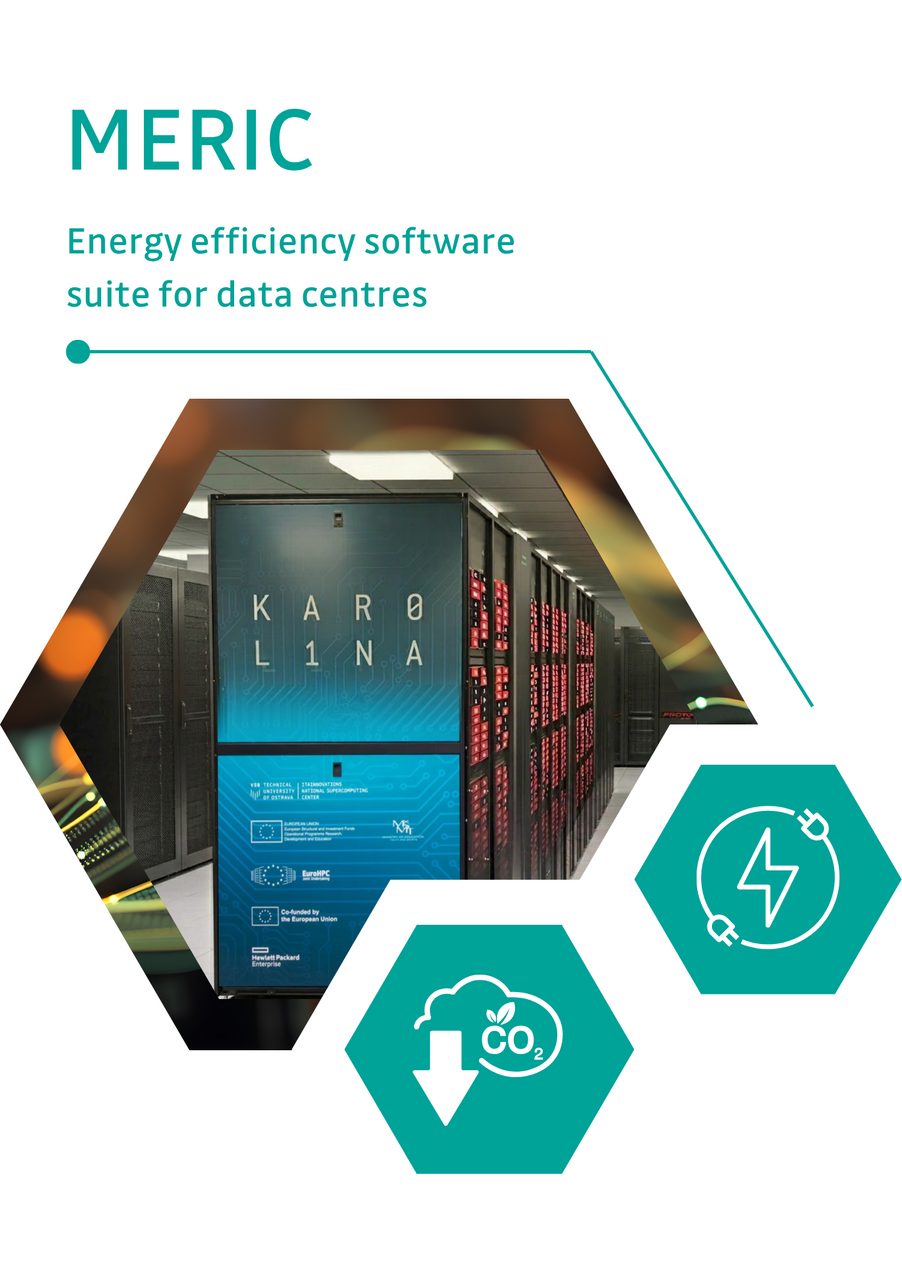
MERIC Energy Aware Suite
Principal Investigator: Dr Ondřej Vysocký; Co-investigator: Doc. Lubomír Říha
Reducing the energy consumption of supercomputers has a direct economic and environmental impact—leading to lower operating costs, annual savings in the millions of crowns, and a significant reduction in the carbon footprint of computations.
MERIC Suite is a set of tools for monitoring and optimising the energy consumption of supercomputers, which is deployed on both the Czech Karolina and Portuguese Deucalion supercomputers. By optimising hardware operations, Karolina’s energy consumption has been reduced by hundreds of MWh per year. The project will be further developed to continue increasing the energy efficiency of the IT4Innovations computing infrastructure.
MERIC is also part of broader European initiatives focused on energy-efficient supercomputing, including AI Factories and the international SEANERGYS project.

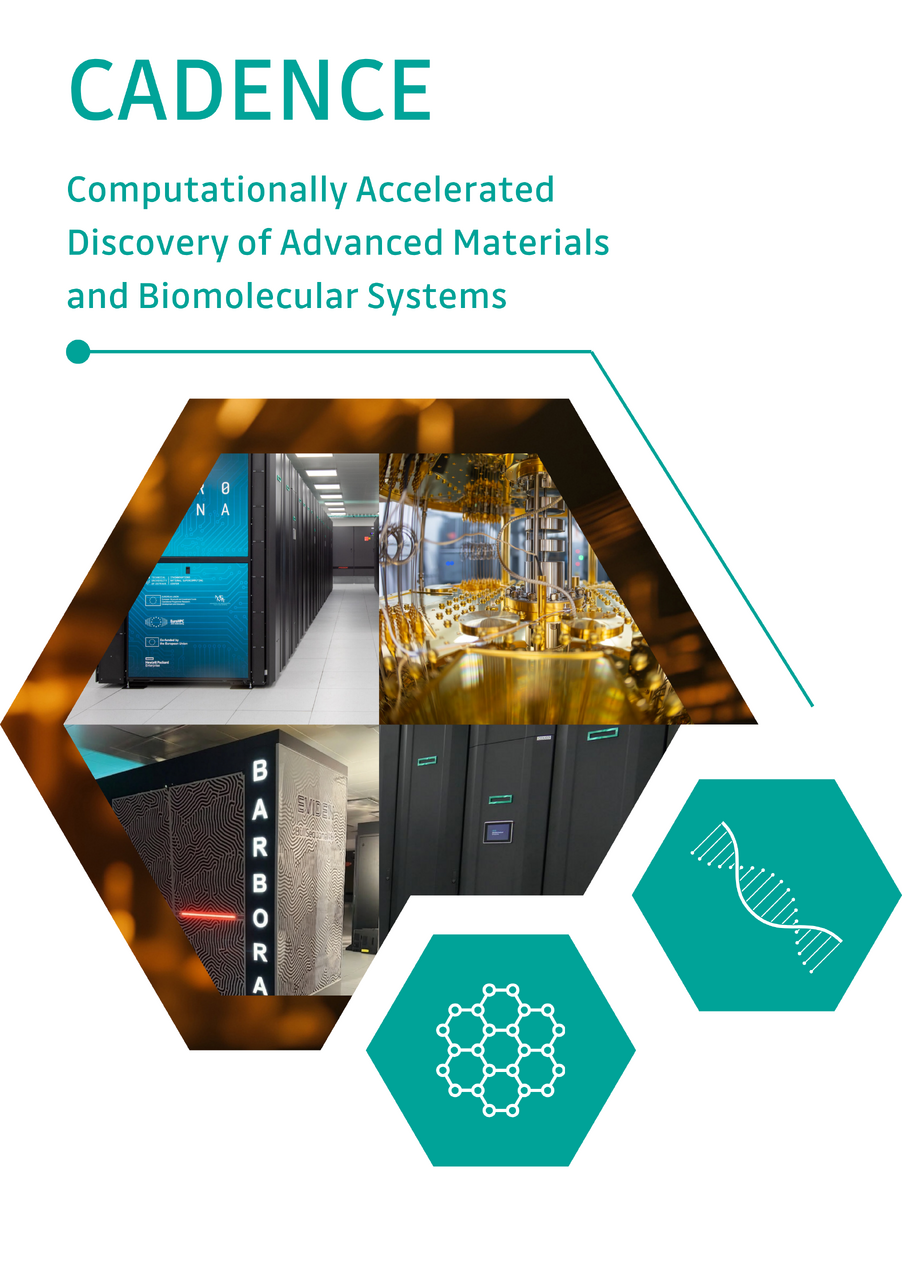
CADENCE – Computationally Accelerated Discovery of Advanced Materials and Biomolecular Systems
Principal Investigator: Prof. Michal Otyepka; Co-investigator: Dr Jan Martinovič
Faster and more efficient materials and drug delivery systems design has a significant socio-economic impact—it fosters innovation in industry, healthcare, and the pharmaceutical sector, while shortening the path from basic research to practical application.
CADENCE establishes an interdisciplinary laboratory for computationally accelerated materials and drug delivery systems design using supercomputers, machine learning, and quantum computing. It focuses on modelling systems exceeding 10⁴ atoms, combining computer simulations, data-driven predictions, and experimental feedback. The team leverages the existing infrastructure and builds on previous projects, such as EXA4MIND, while fostering synergies with both ongoing and new projects, such as REFRESH. To manage data in accordance with FAIR principles and automate model testing, the ADAMS4SIMS platform will be utilised. The long-term goal is to create a scalable knowledge base that will accelerate the materials and drug delivery systems design. CADENCE ambitiously aims to become the European leader in this field.
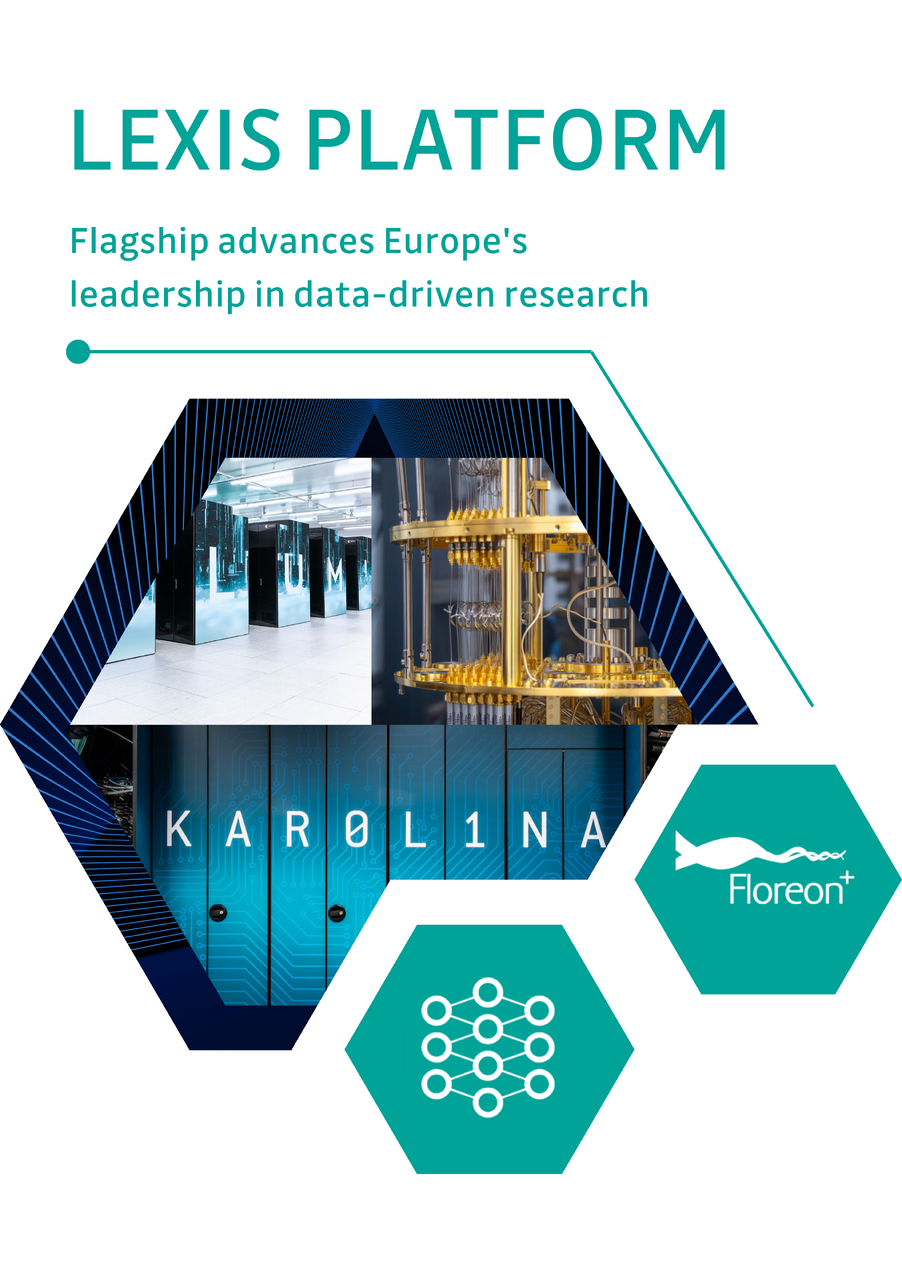
LEXIS Platform
Principal Investigator: Dr Jan Martinovič
The LEXIS Platform strengthens Europe’s leadership in data-driven research by combining supercomputing systems, artificial intelligence, and cloud and quantum technologies. The objective is to enable researchers to design and run complex scientific workflows across different computing and data infrastructures through a unified orchestration layer, providing a seamless experience as if working with a single system.
The technologies developed under this initiative simplify access to supercomputing resources, foster the development of advanced artificial intelligence tools, and encompass the entire lifecycle management of AI models—from their design and training to their practical deployment. Simultaneously, they aim for their integration with the LUMI AI Factory and Czech AI Factory infrastructures, enabling the expansion and synergistic interconnection of the services provided.
These activities are also part of the EuroHPC JU Federated Platform (EFP), which connects European supercomputers and provides tools for their effective use across various scientific and application domains. The initiative also includes activities related to the FLOREON+ system, which enables monitoring, modelling, prediction, and support in crisis management.
With an emphasis on openness, collaboration, and scientific productivity, the initiative promotes new research and knowledge-sharing models, aiming to become one of the fundamental pillars of a sustainable European research ecosystem.
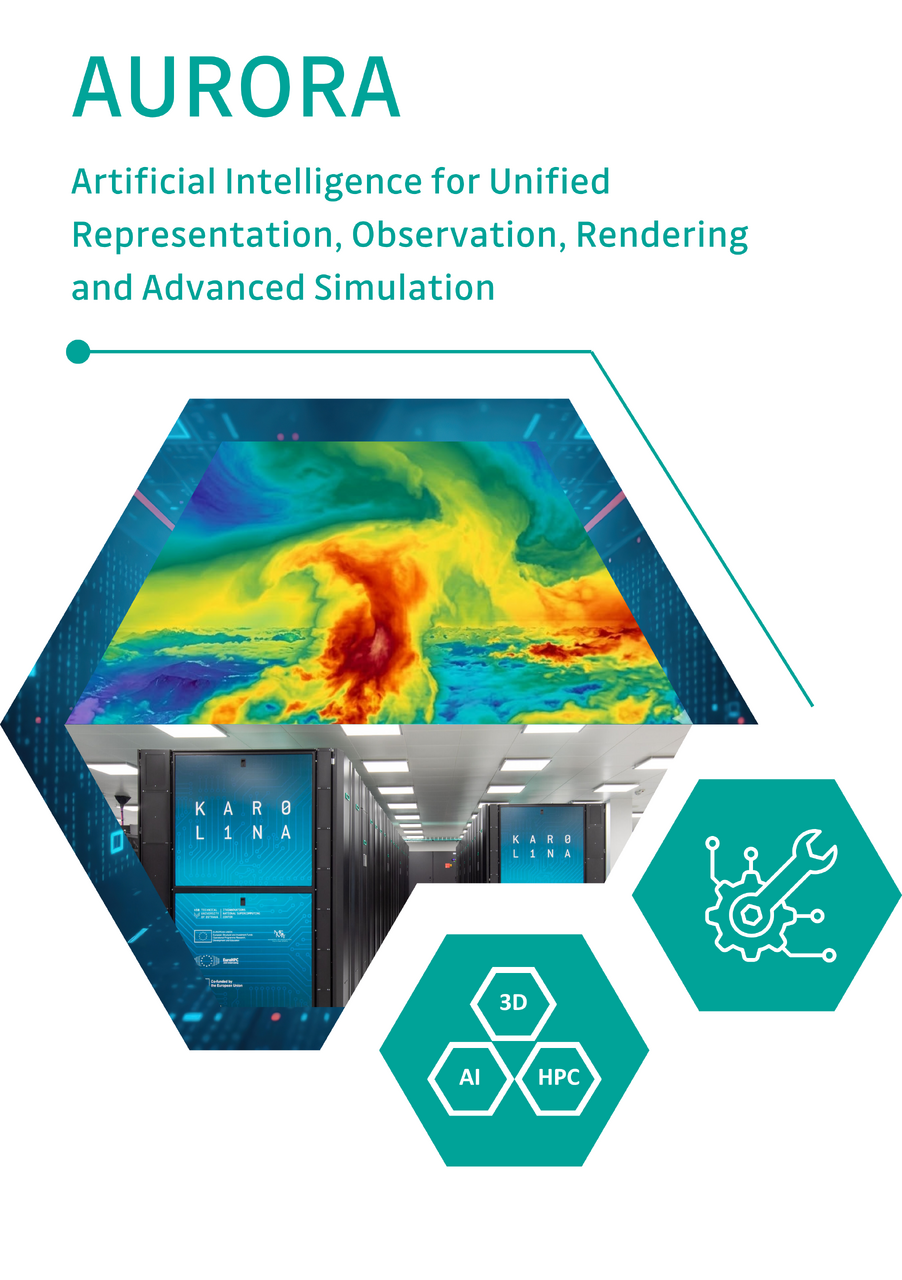
AURORA – Artificial Intelligence for Unified Representation Observation, Rendering and Advanced Simulation
Principal Investigator: Dr Tomáš Brzobohatý; Co-investigator: Dr Petr Strakoš
Accelerating the solution of complex scientific and engineering problems enhances the competitiveness of both research and industry, enabling the faster transfer of advanced technologies into practice.
AURORA will introduce an advanced approach to simulating physical problems combining high-performance computing (HPC), artificial intelligence, the generation of synthetic 3D data, and advanced visualisation. It will focus on developing and systematically validating AI models that will significantly accelerate or partially replace computationally intensive simulation procedures that limit the speed of design, optimisation, and testing in industrial practice, particularly in situations where sufficient or representative sets of experimental measurements are not available. An important component will be automated learning from pre-simulated and generated scenarios, including working with synthetic 3D data and its rendering. These approaches will enable more efficient development of digital twins, faster decision-making, and a better understanding of complex technical processes. This will result in shorter development cycles, reduced costs, and broader application of artificial intelligence in industrial applications, particularly in areas where traditional calculations are too slow or costly.
HPQC4F – High Performance and Quantum Computing for Future
Principal Investigator: Prof. Marek Lampart; Co-investigator: Dr Dominik Legut
Combining classical and quantum computing will pave the way for more accurate models and faster problem-solving, with direct implications for the energy sector, industry, and other technological applications.
The HPQC4F project will create a comprehensive library of validated use cases from academia and industry that leverage the synergy of supercomputers and quantum computers to solve challenging problems. These will be specific scenarios and case studies demonstrating how classical high-performance computing (HPC) can be combined with quantum algorithms (QC) to complement each other. Examples will include, among other things, advanced computational methods and data analytics, including selected machine learning methods for predicting the properties of materials used in energy and industrial facilities. The library will also include applications in the areas of risk assessment, energy grid optimisation, insurance, improving the efficiency of supercomputing infrastructure, quantum dynamics, quantum algorithms for dynamic modal decomposition, and quantum biological modelling.
Supercomputers will ensure the large-scale data processing and complex simulations, while quantum computing will accelerate the most computationally intensive parts of problems. This hybrid approach will thus enable the effective solution of problems that are difficult to tackle using classical or quantum computations alone, such as the development of interatomic potentials of magnetic materials both below and above the critical temperature.
