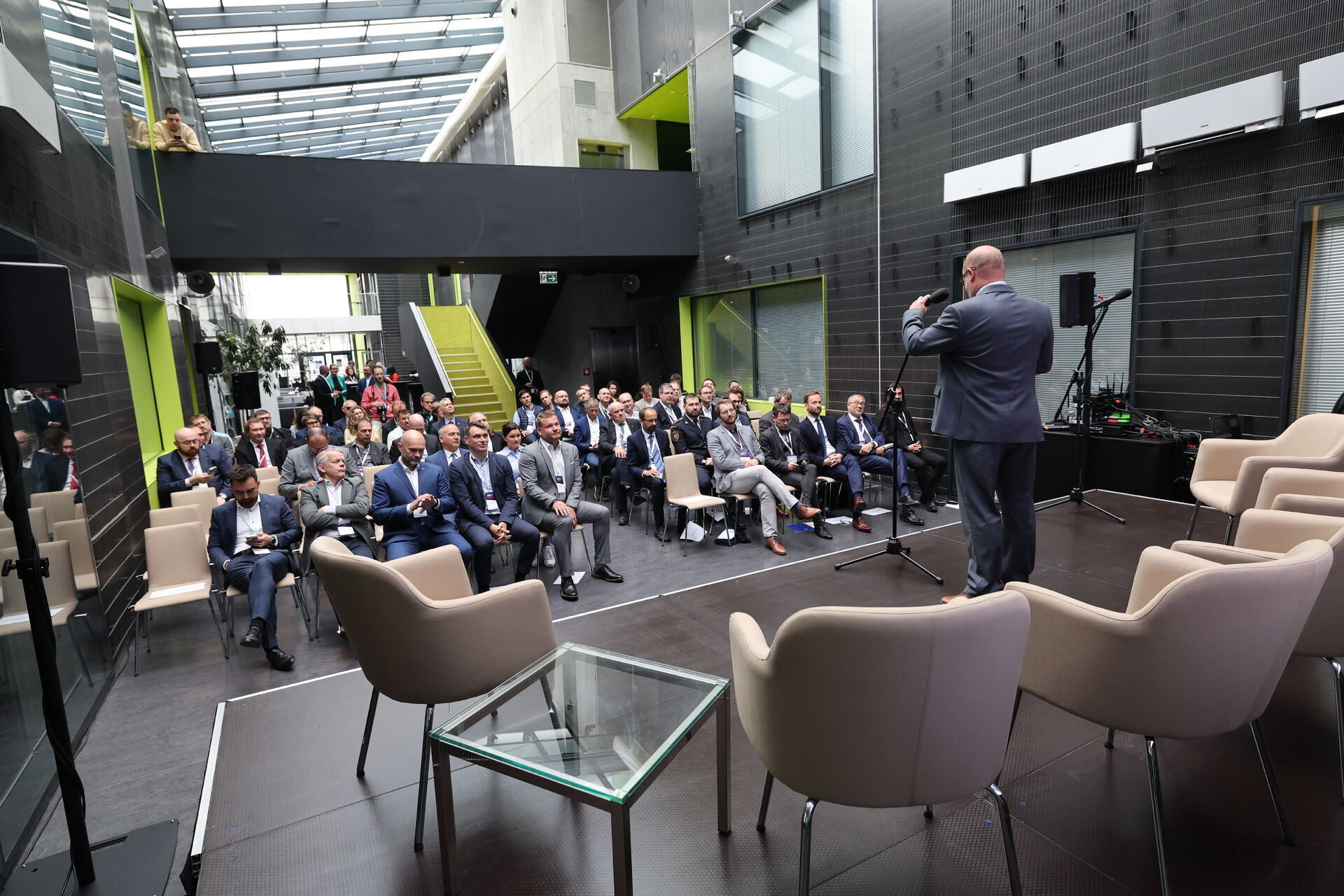
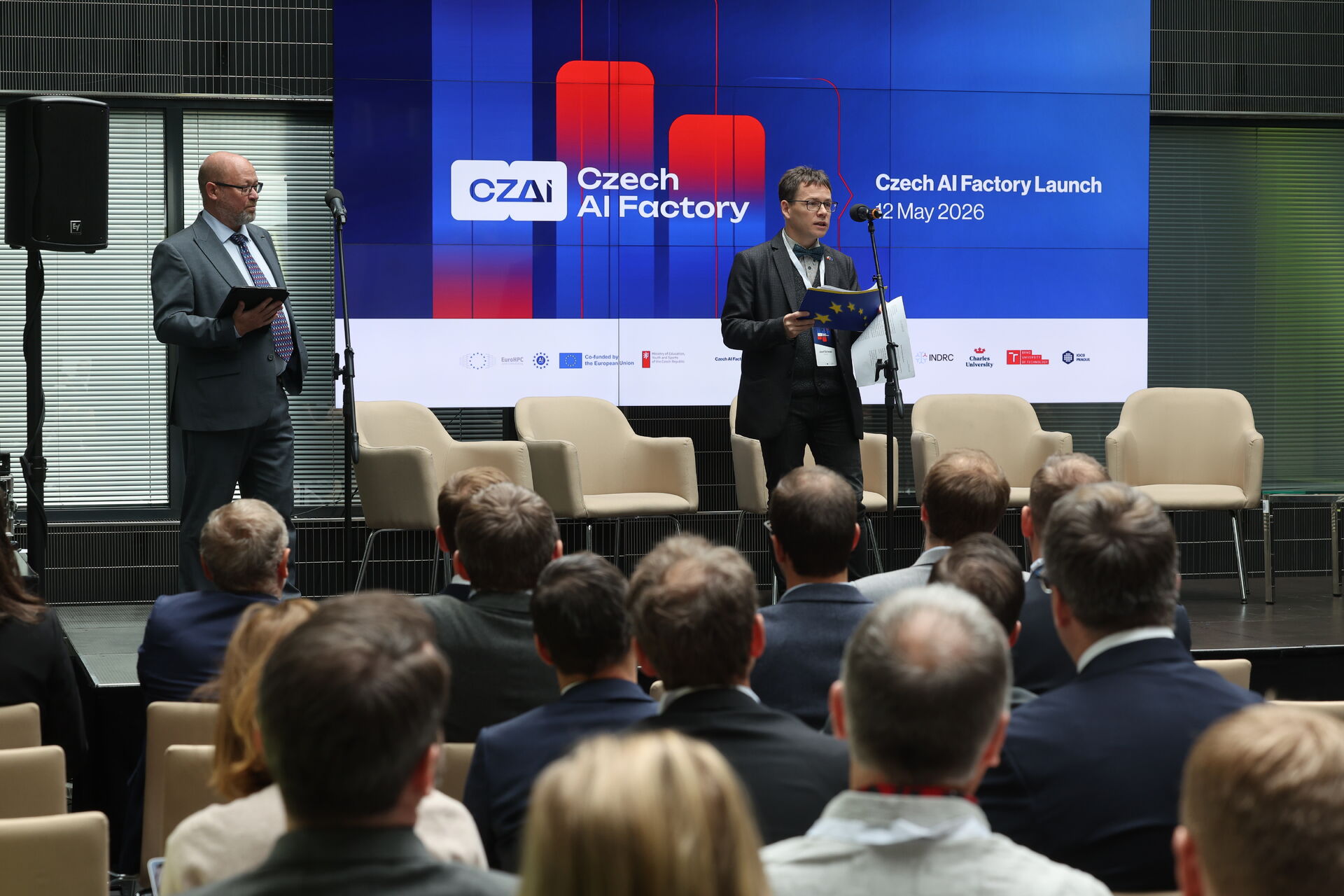
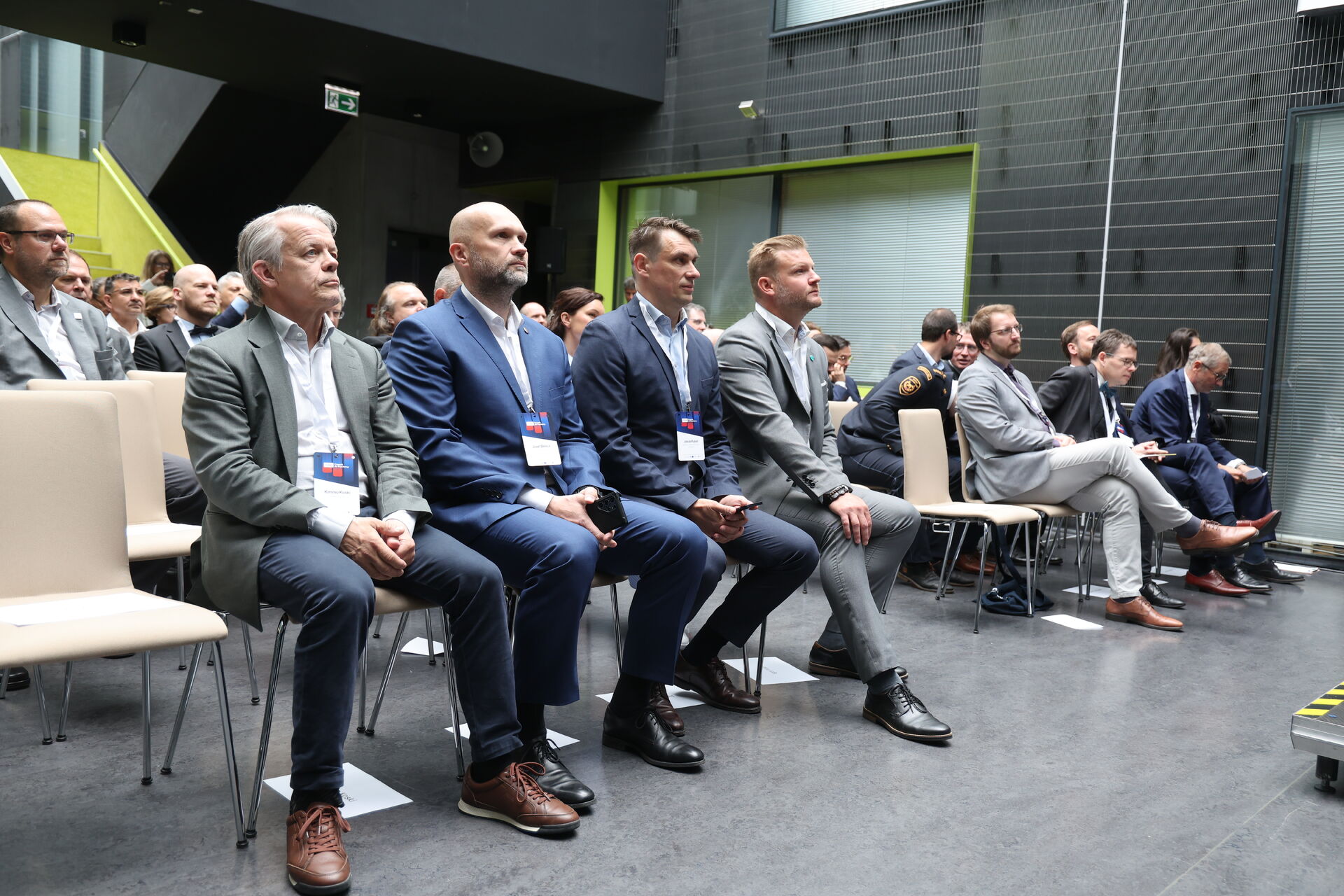
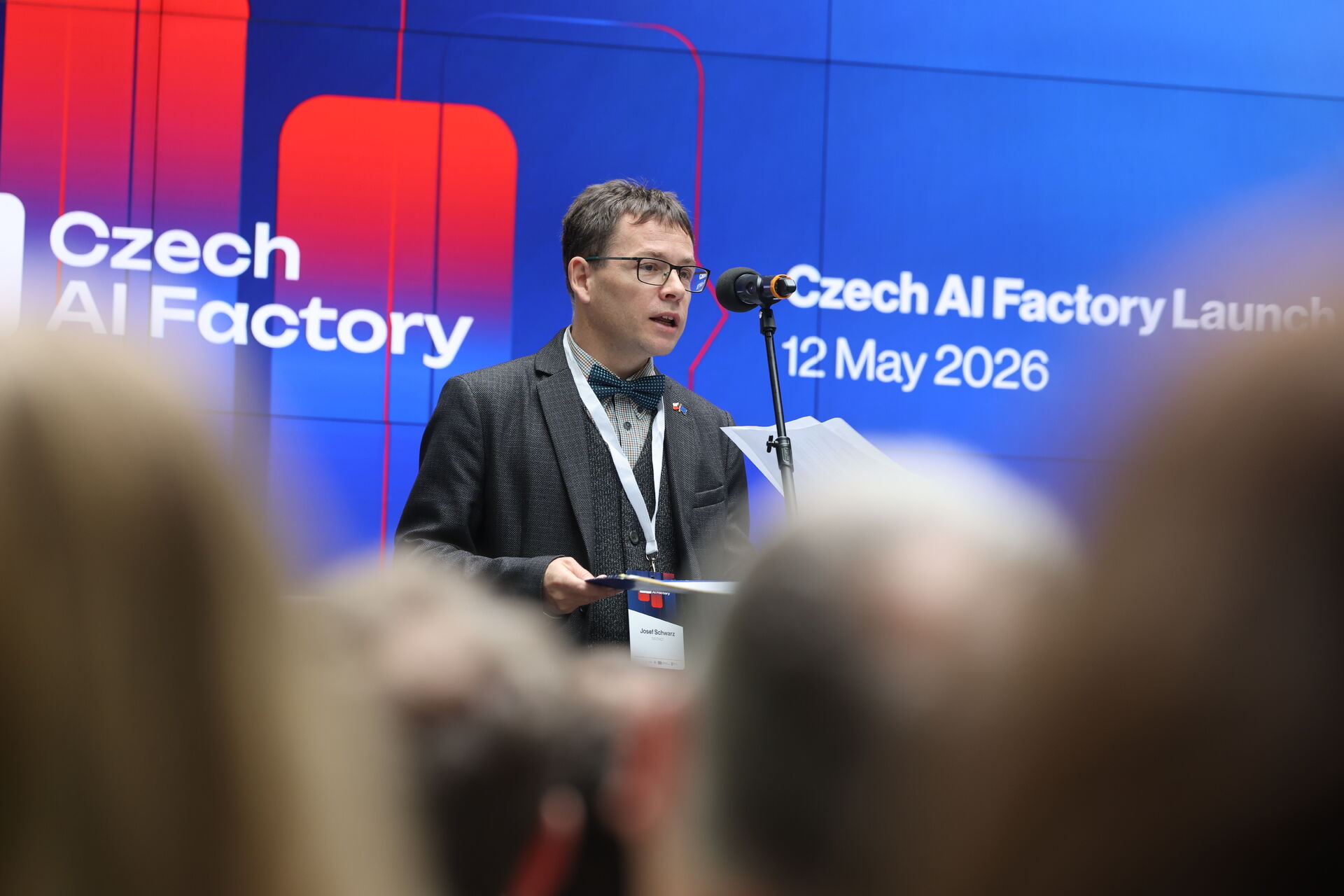
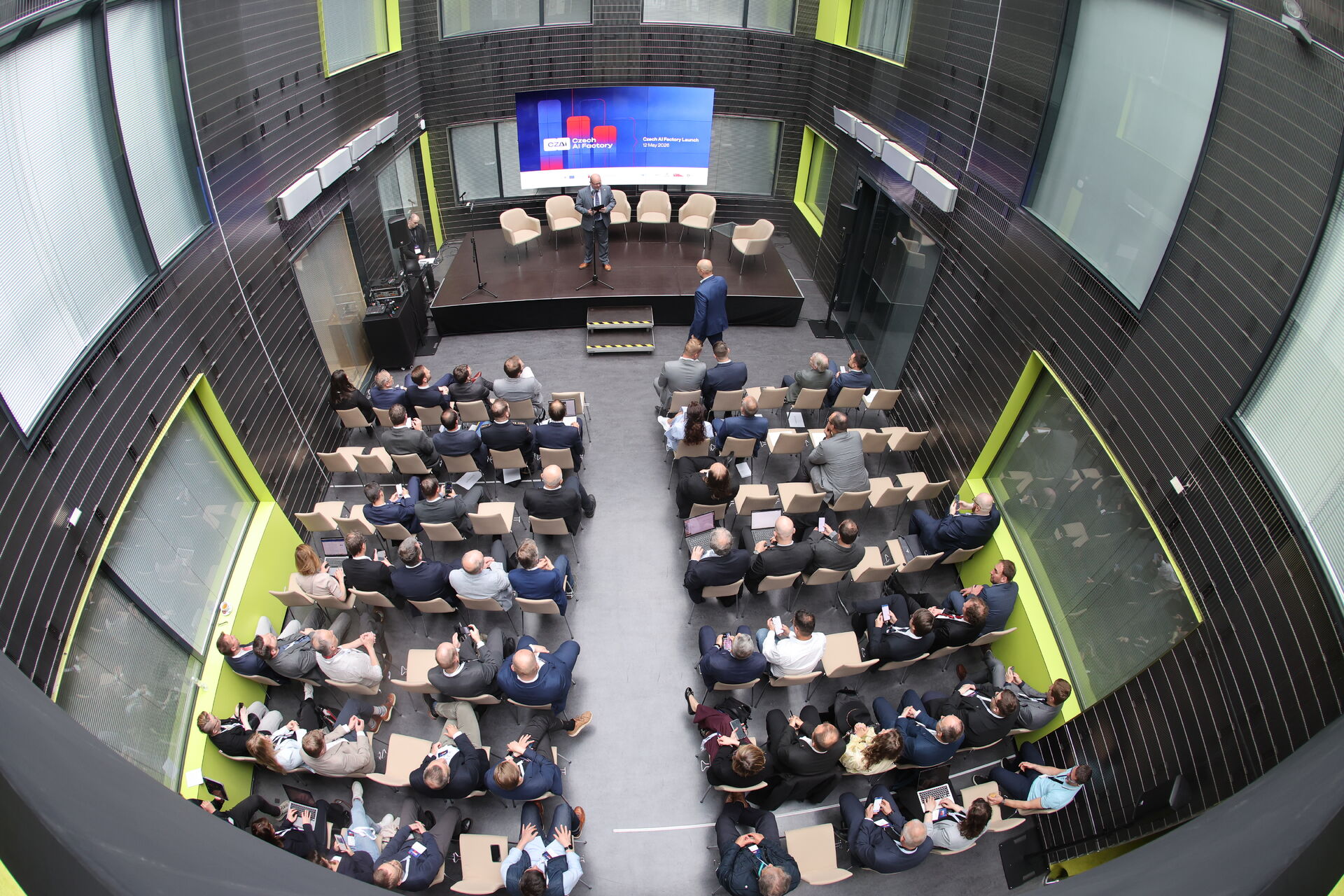
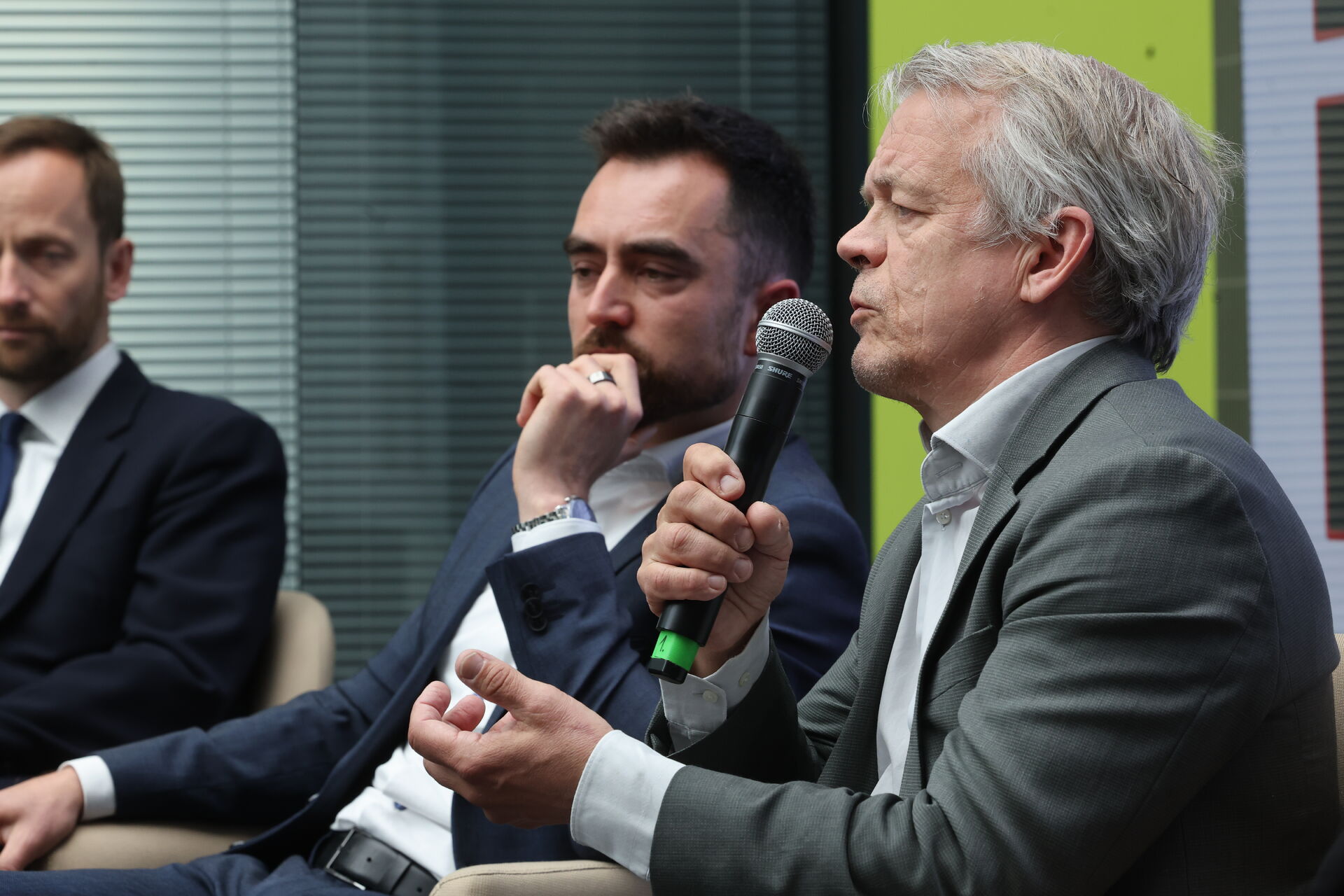
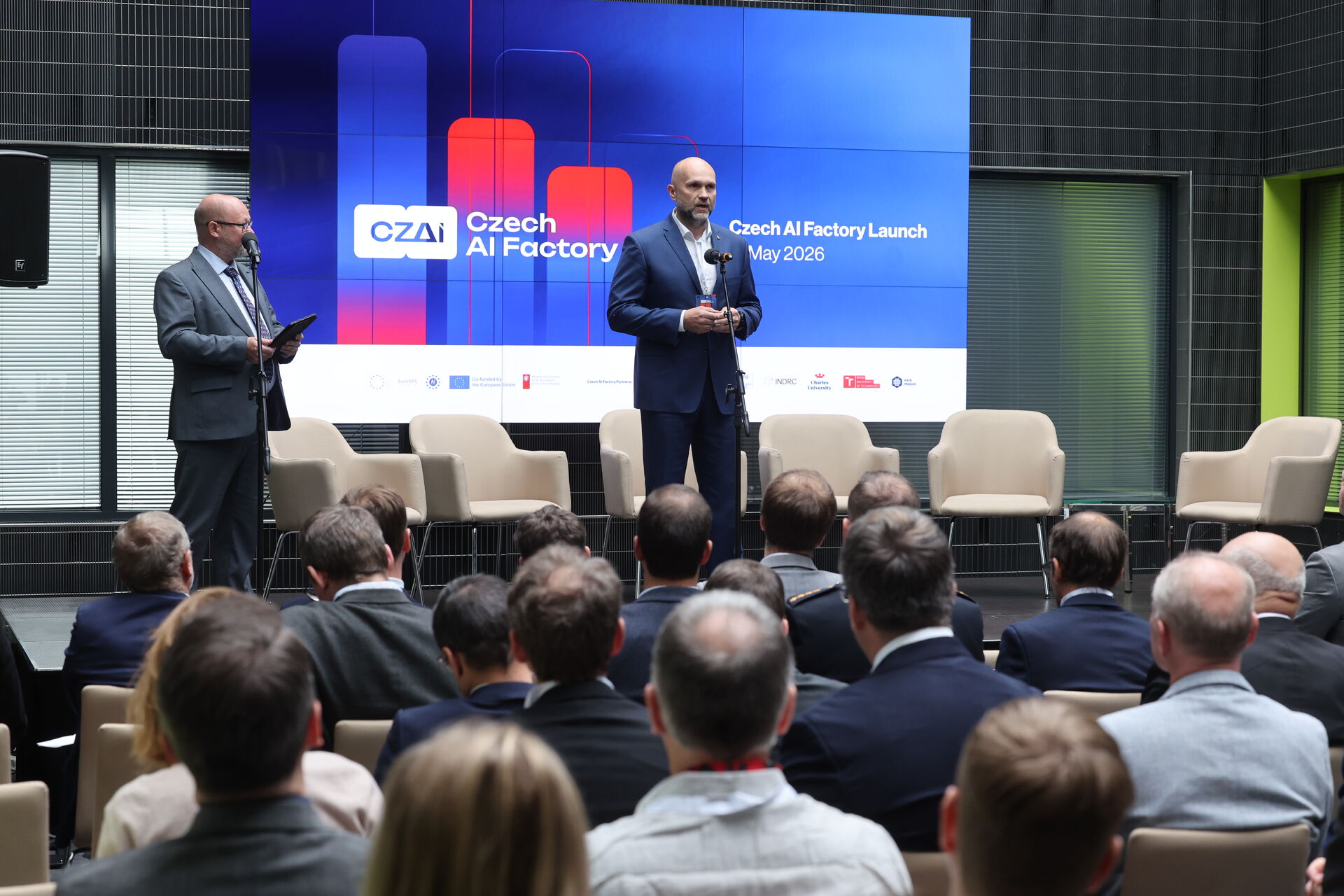
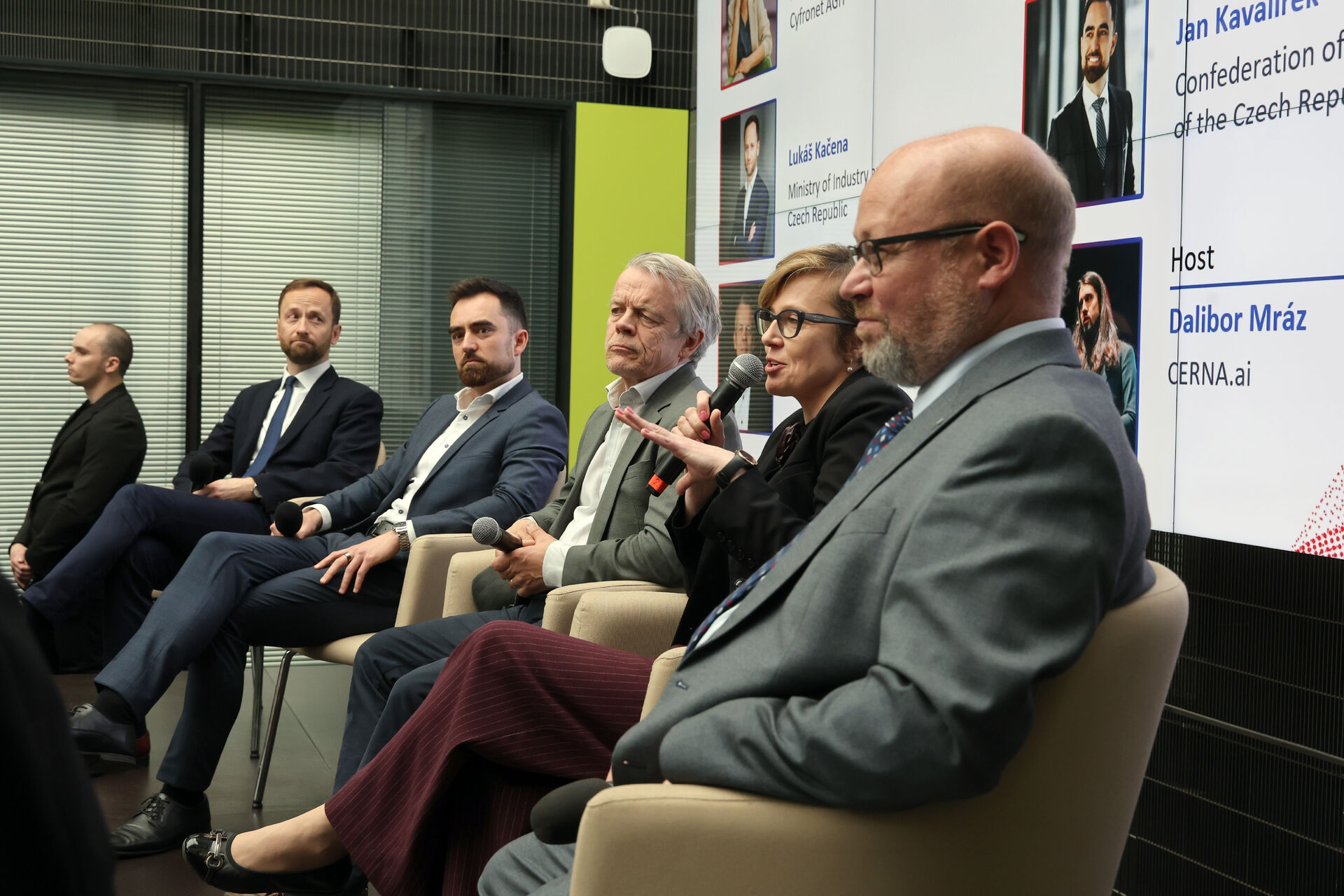
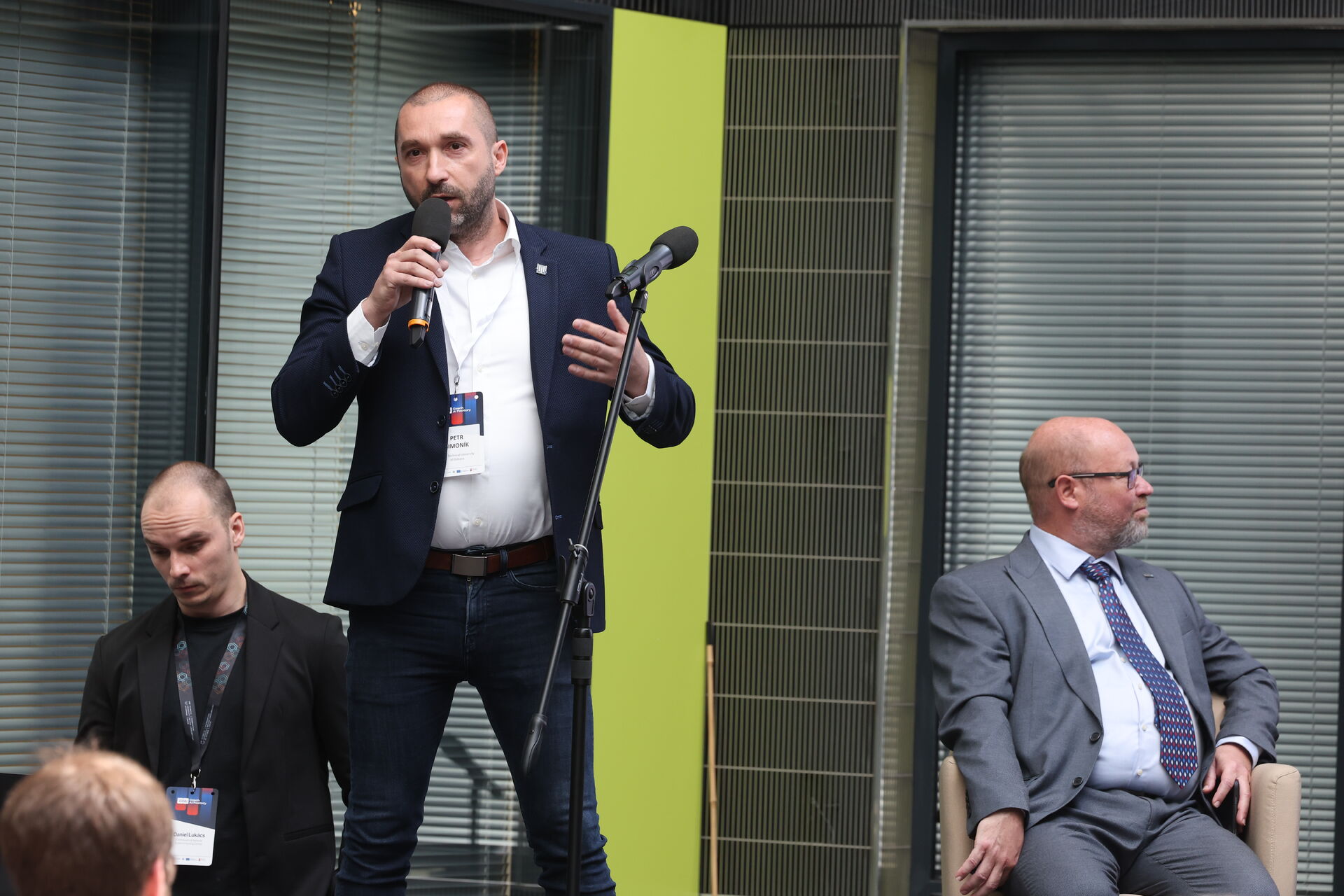
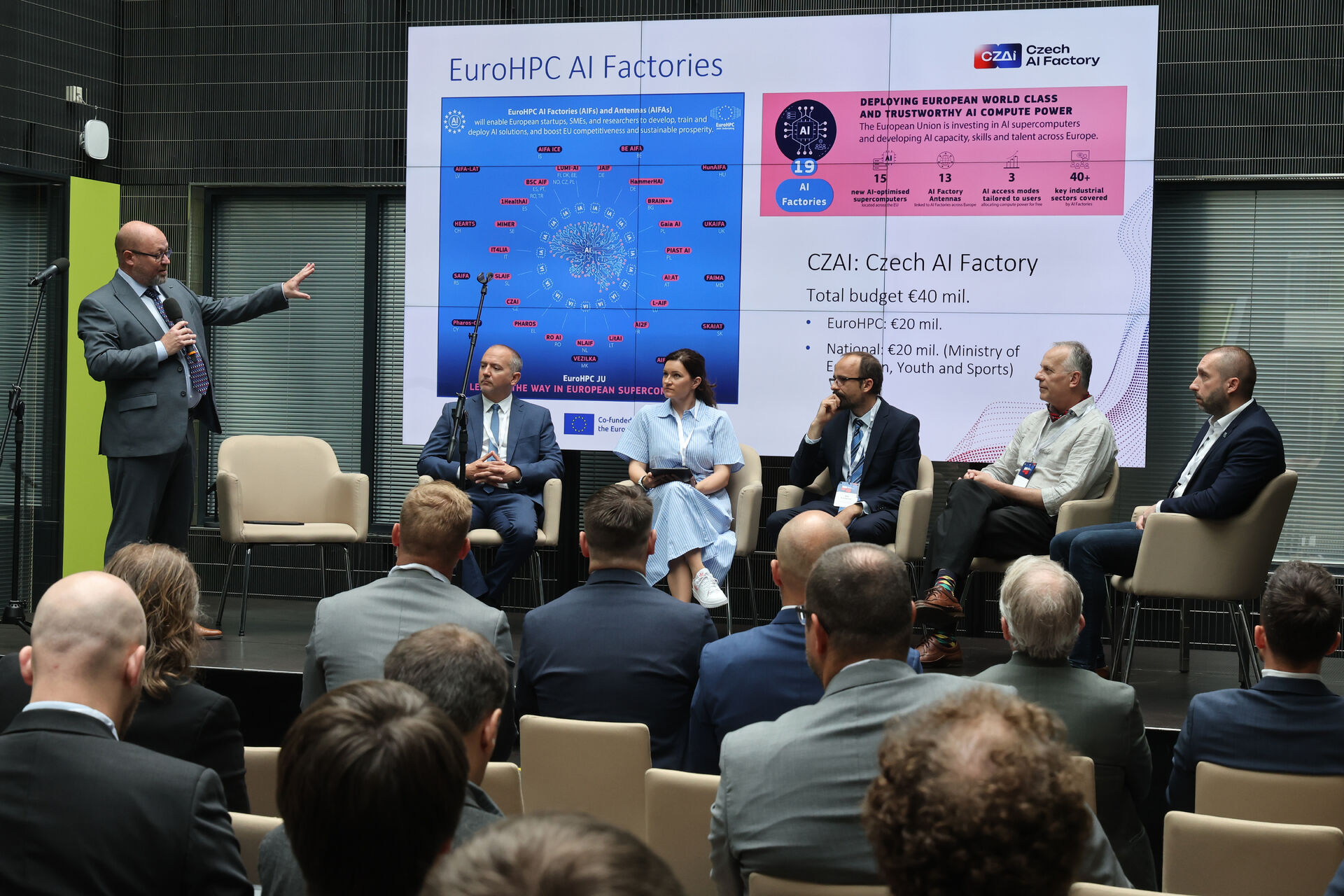
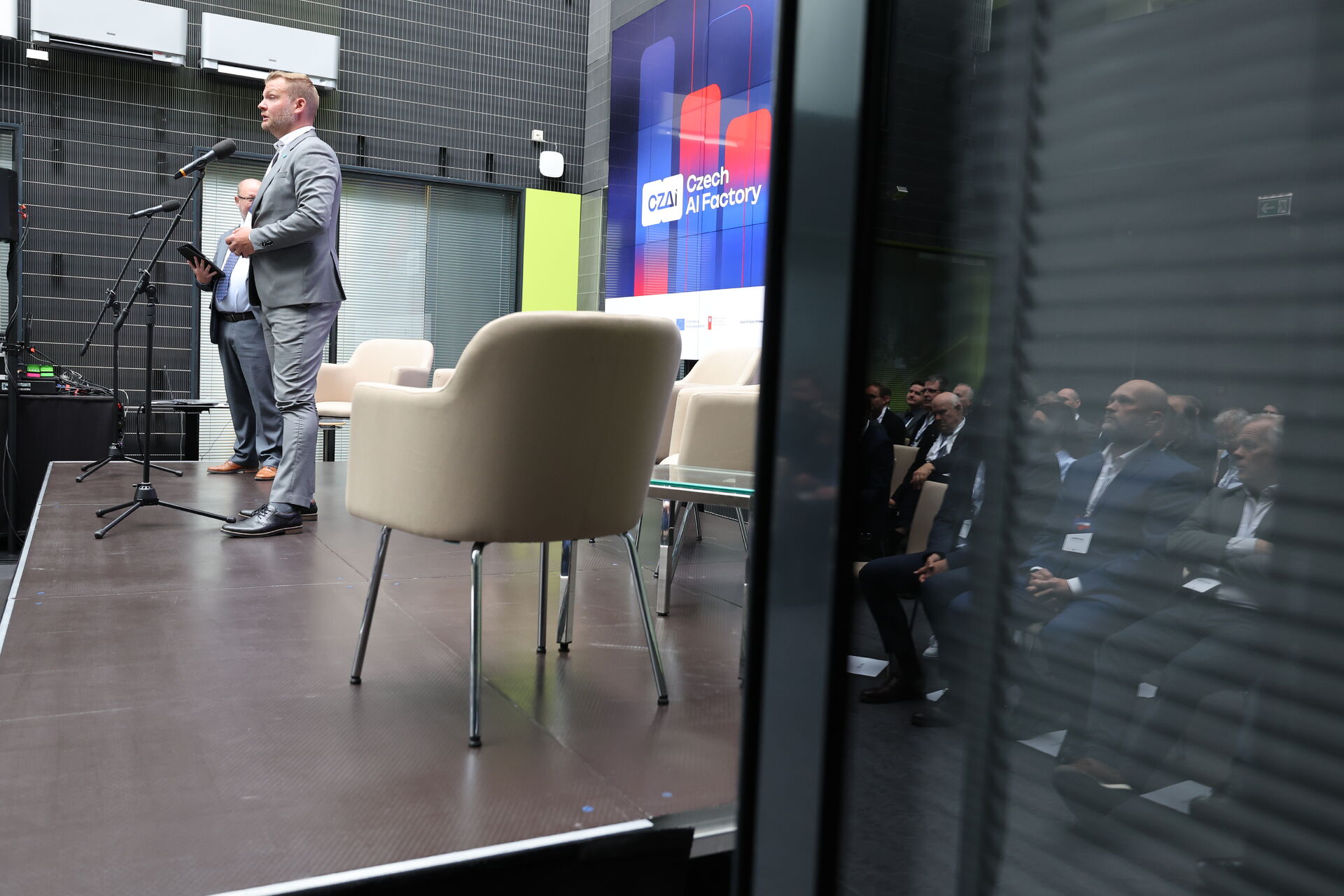
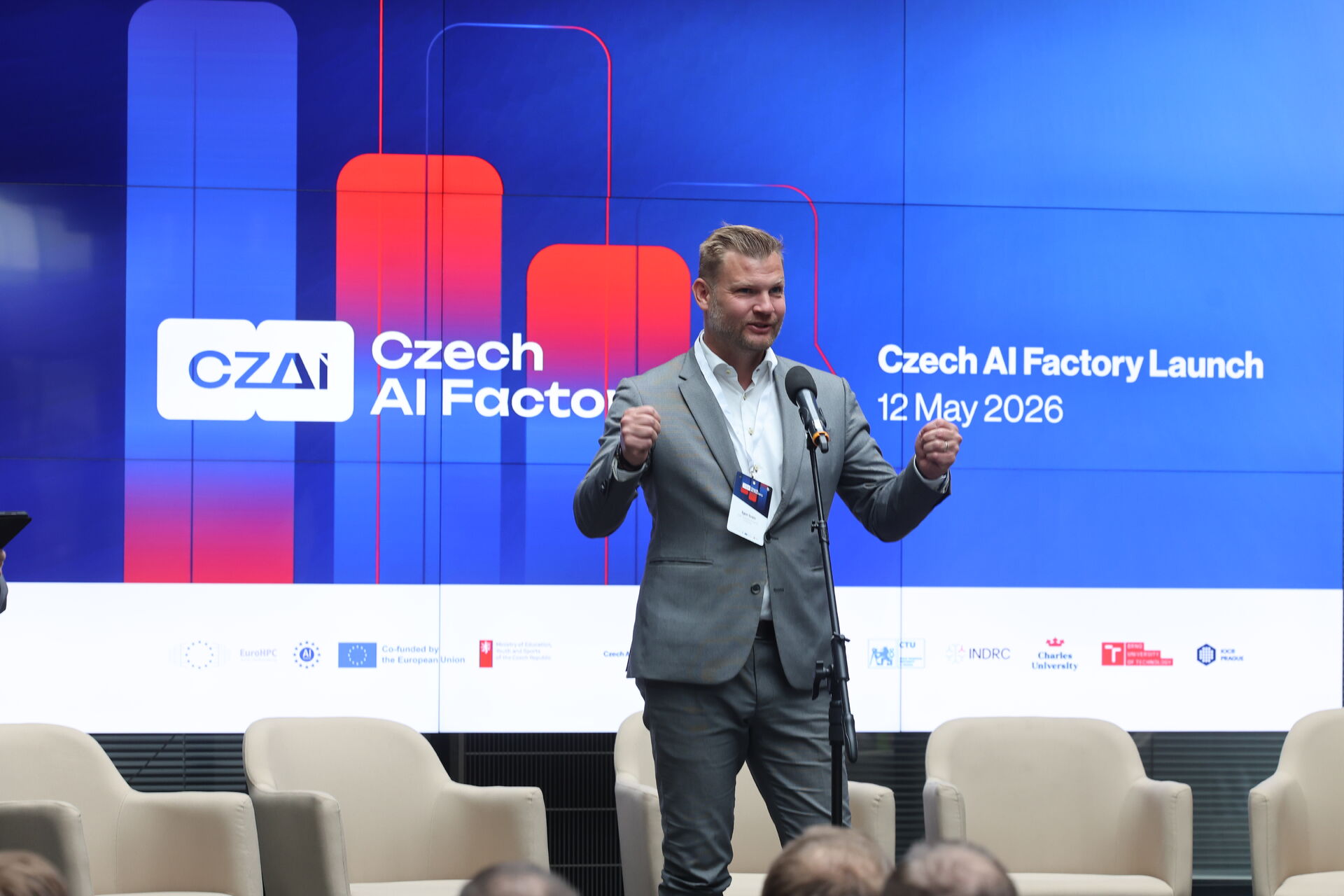
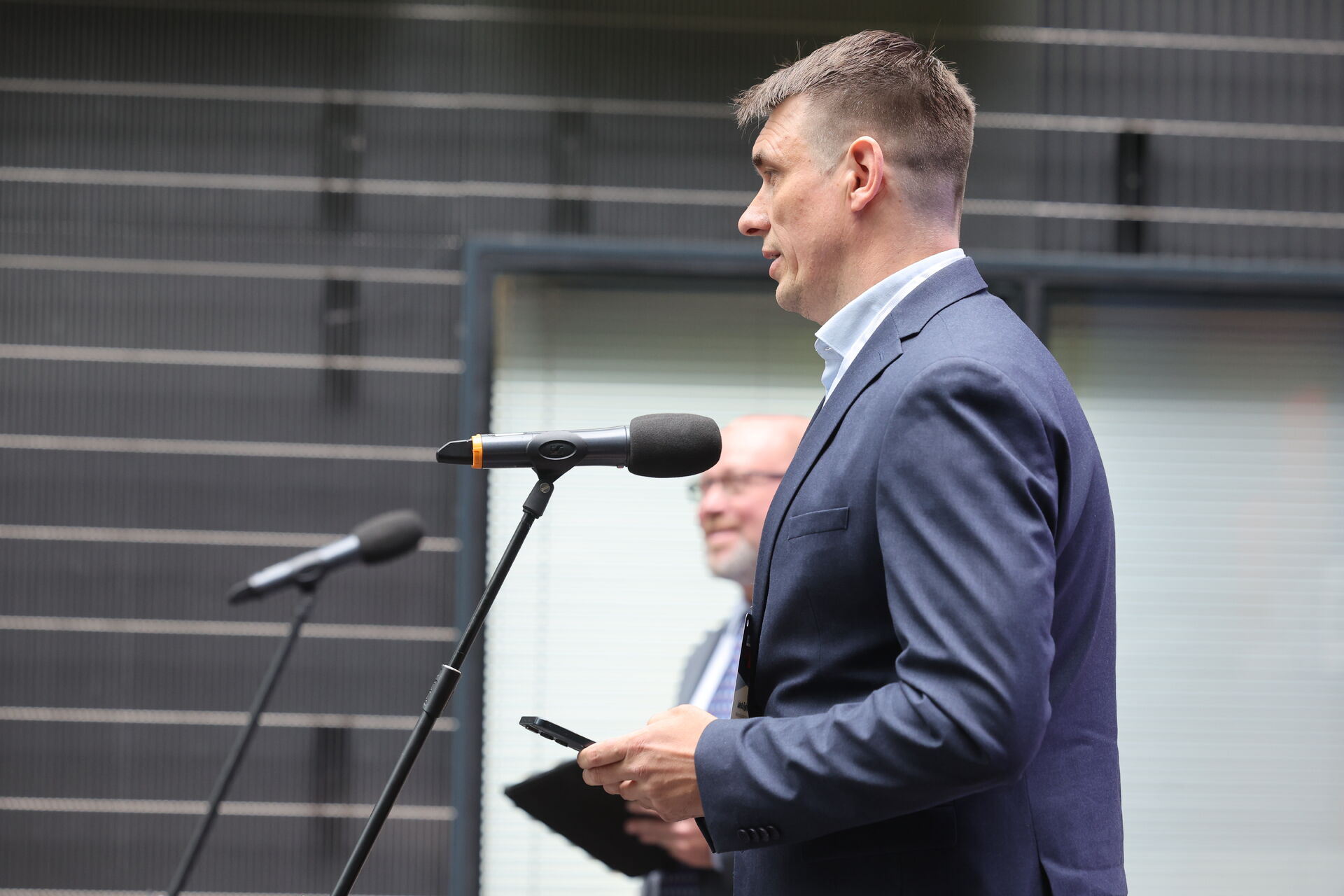
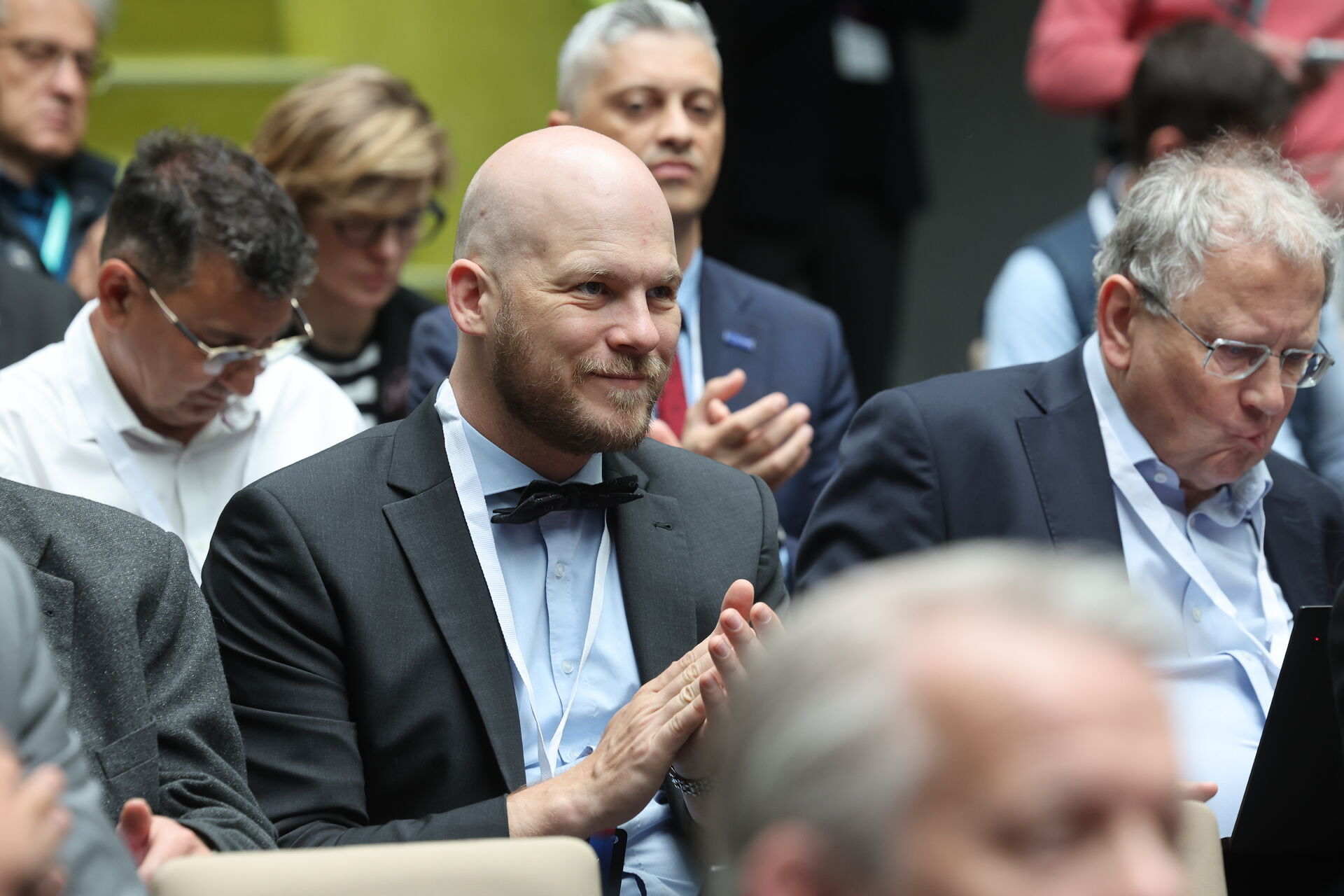
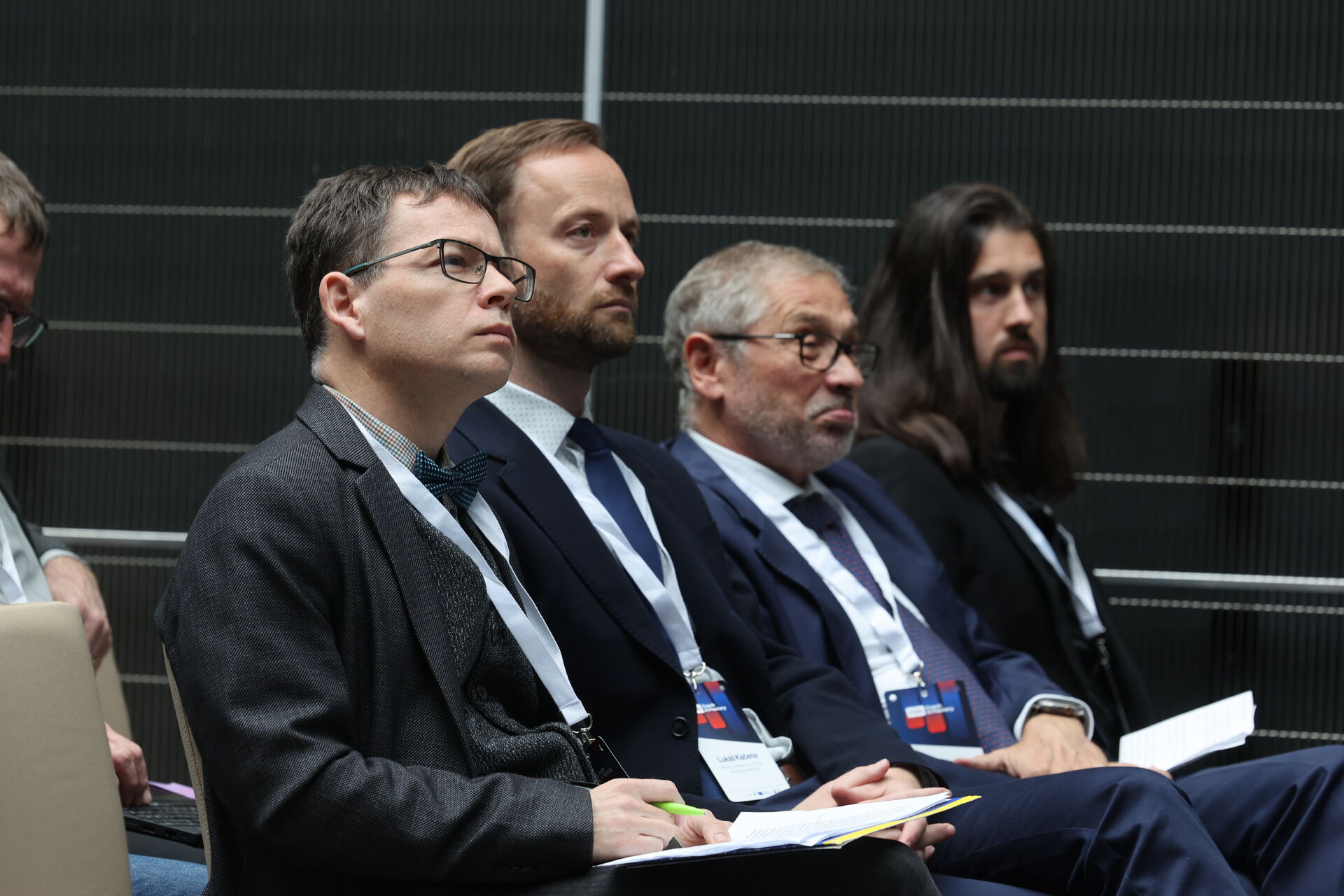
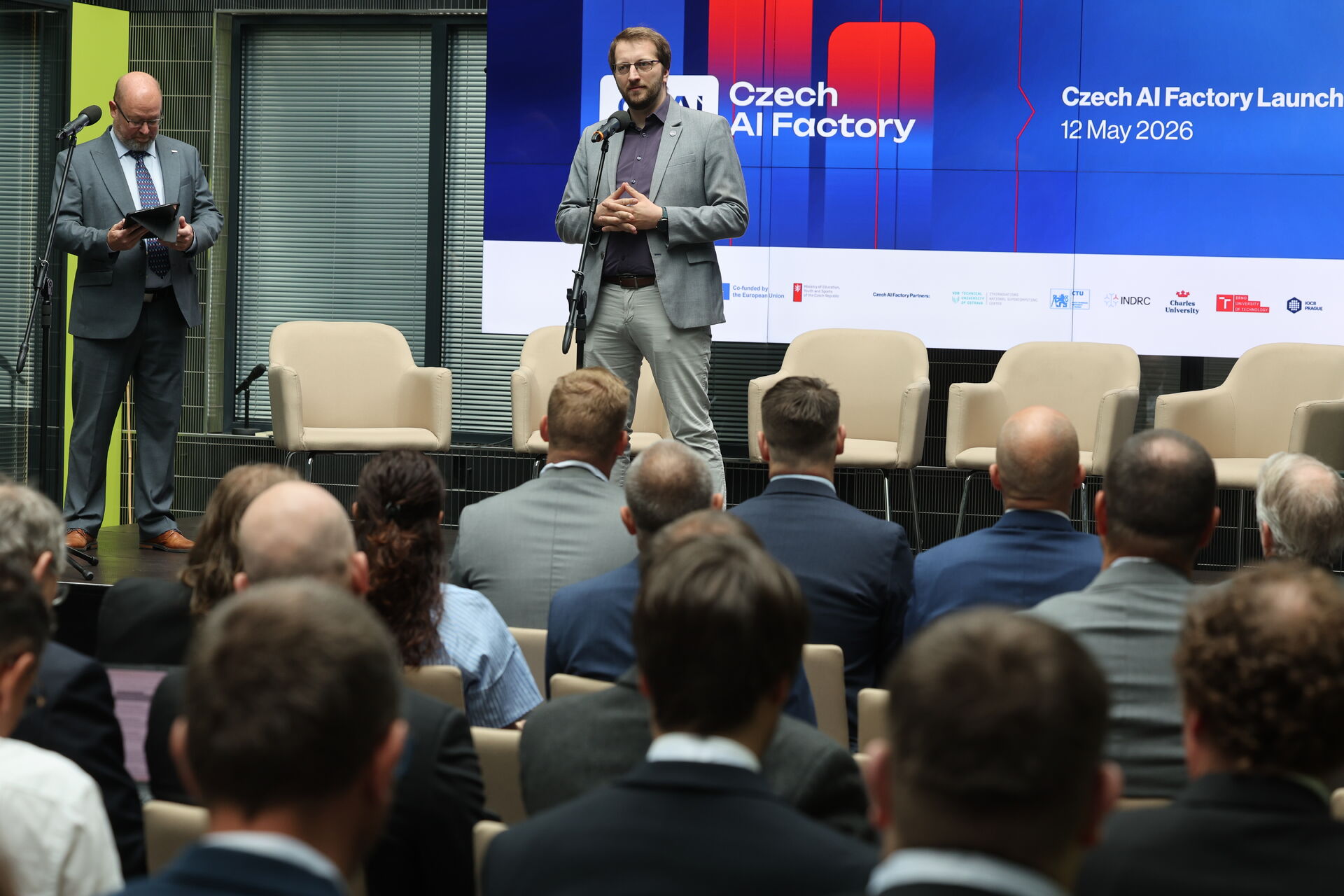
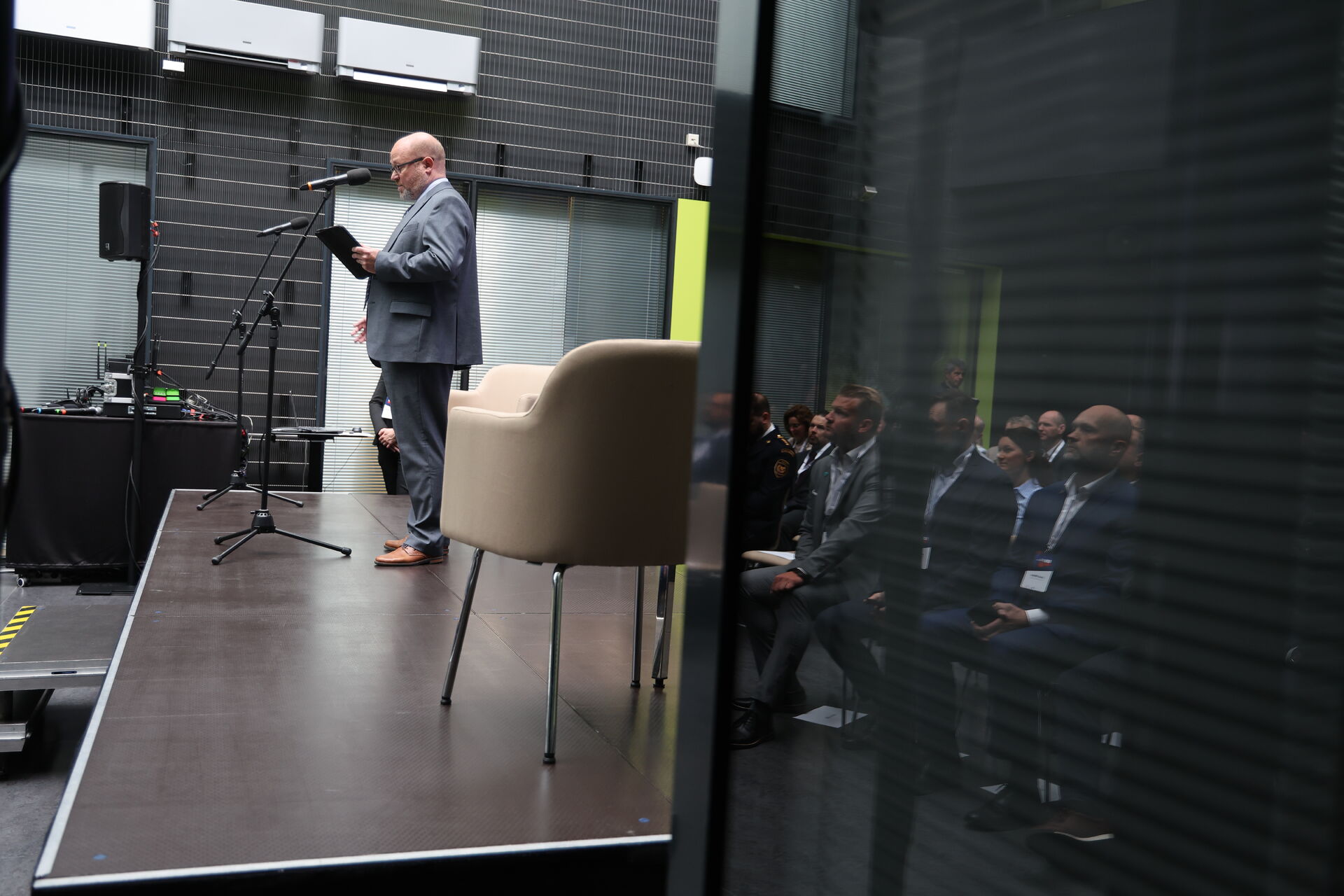
On Tuesday, 12 May 2026, the Czech AI Factory (CZAI) project was officially launched in Ostrava during a gathering of leading AI experts, representatives of government, public administration and industry. CZAI will serve as the Czech node of the European network of AI Factories being developed under the EuroHPC Joint Undertaking (EuroHPC JU). The initiative brings together supercomputing infrastructure, data, expert support and application know-how into a single ecosystem of AI services accessible to companies, startups, public institutions and research organisations. CZAI aims to significantly strengthen the Czech Republic’s position within the European AI ecosystem.
Artificial intelligence is becoming a decisive factor for Europe’s future competitiveness. Technology and computing power are essential, but they are not enough on their own. The gap between a laboratory model and a solution that can reliably operate on a production line, in a hospital, within an energy grid or inside an autonomous vehicle lies in deep domain expertise - knowledge of data, processes, regulations and real operational conditions. This combination is where Czech AI Factory creates its main value. The project addresses the lack of specialised AI infrastructure in the Czech Republic by combining the newly acquired AI-optimised KarolAIna supercomputer with a comprehensive portfolio of AI services, including software tools, data management and expert support.
“Czech AI Factory represents a major step towards making the Czech Republic an active part of Europe’s next-generation AI infrastructure,” said Vít Vondrák, Director of the national supercomputing centre IT4Innovations and coordinator of the project. “Our goal is not only to provide computing power, but to build an open ecosystem connecting supercomputers, data, expert support and application know-how into practical services for industry, public administration and research. Through integration with the European network of AI Factories and EuroHPC JU supercomputers, Czech organisations will gain access to cutting-edge AI infrastructure and the opportunity to contribute to building a technologically sovereign and trustworthy European AI ecosystem.”
The project, with a total budget of nearly CZK 1 billion, brings together leading Czech universities and research organisations. Half of the funding is provided by the European EuroHPC Joint Undertaking, while the other half is financed by the Czech Republic through the Ministry of Education, Youth and Sports.
“The development of artificial intelligence and high-performance computing is one of the key priorities for the competitiveness of both Europe and the Czech Republic. Czech AI Factory will connect research, infrastructure and concrete services for industry and the public sector, helping accelerate the practical deployment of AI in areas with high societal and economic impact,” said Lukáš Kačena, Government Envoy for AI, Ministry of Industry and Trade.
The Czech AI Factory project is jointly implemented by six leading Czech institutions specialising in supercomputing, artificial intelligence and digital innovation. The project coordinator is VSB – Technical University of Ostrava (VSB-TUO) and its national supercomputing centre IT4Innovations, which operates the Czech national supercomputing infrastructure and has long participated in major EuroHPC JU projects, including the LUMI AI Factory.
The Czech Institute of Informatics, Robotics and Cybernetics at the Czech Technical University in Prague (CIIRC CTU) is responsible within CZAI for the development of AI services across a wide range of application areas, collaboration with testbeds and industry, and the development of the national AI ecosystem. The Faculty of Electrical Engineering at CTU in Prague (FEE CTU) is also involved in the project on behalf of CTU. The International Neurodegenerative Disorders Research Center (INDRC), a private non-profit research institute, leads activities related to business development and technology transfer and provides training in ethics, regulatory compliance and innovation management.
The Faculty of Mathematics and Physics at Charles University (MFF UK) contributes through the development of language, multimodal and other AI models and tools. Brno University of Technology (BUT) contributes its leading AI teams from the Faculty of Information Technology (FIT), Faculty of Civil Engineering (FCE) and CEITEC in areas including speech processing, cybersecurity, mobility and medical applications, while also leading the educational and training activities of the project. The Institute of Organic Chemistry and Biochemistry of the Czech Academy of Sciences (IOCB Prague) contributes expertise in chemical biology and data-driven research while supporting the development of AI services for healthcare and life sciences.
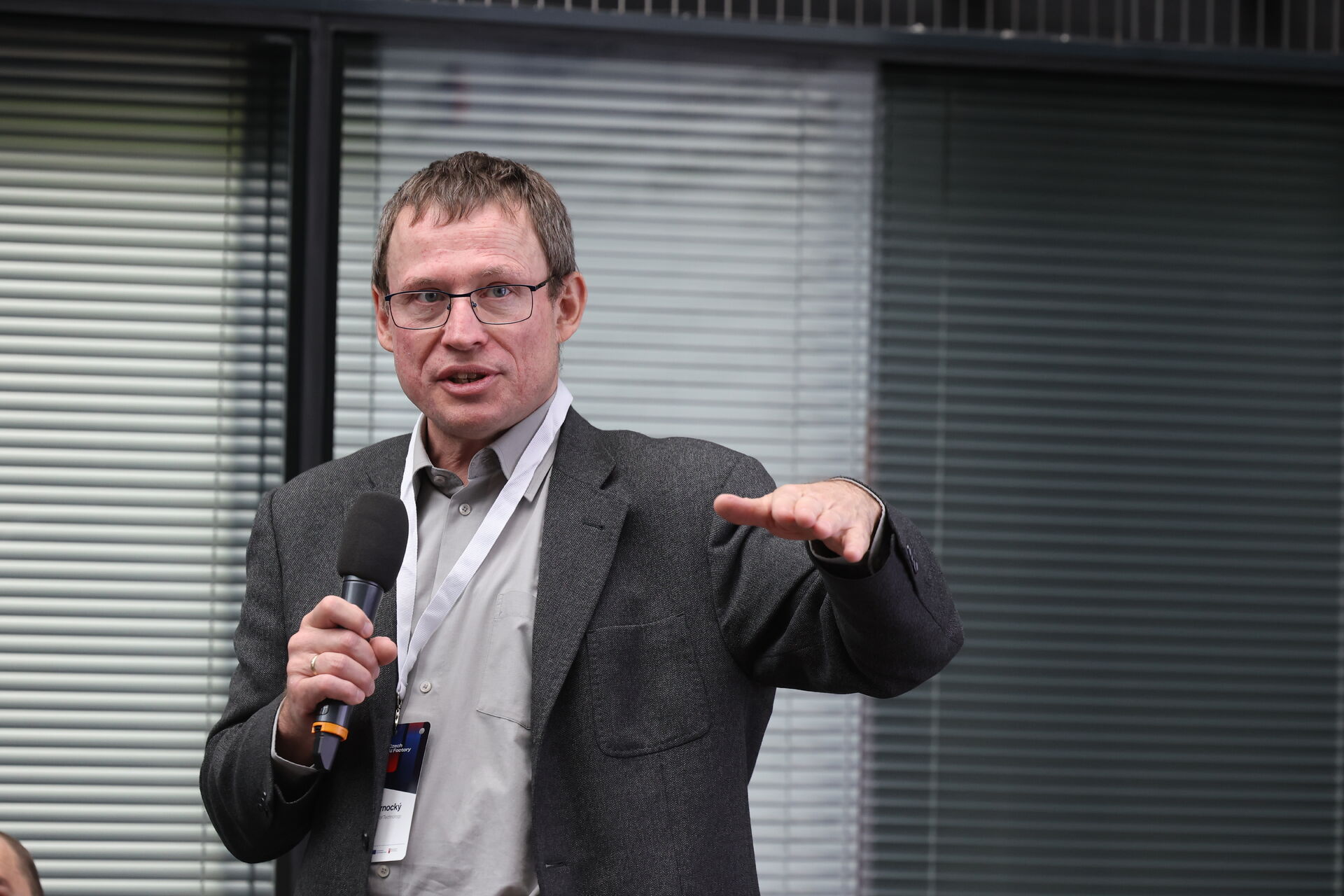
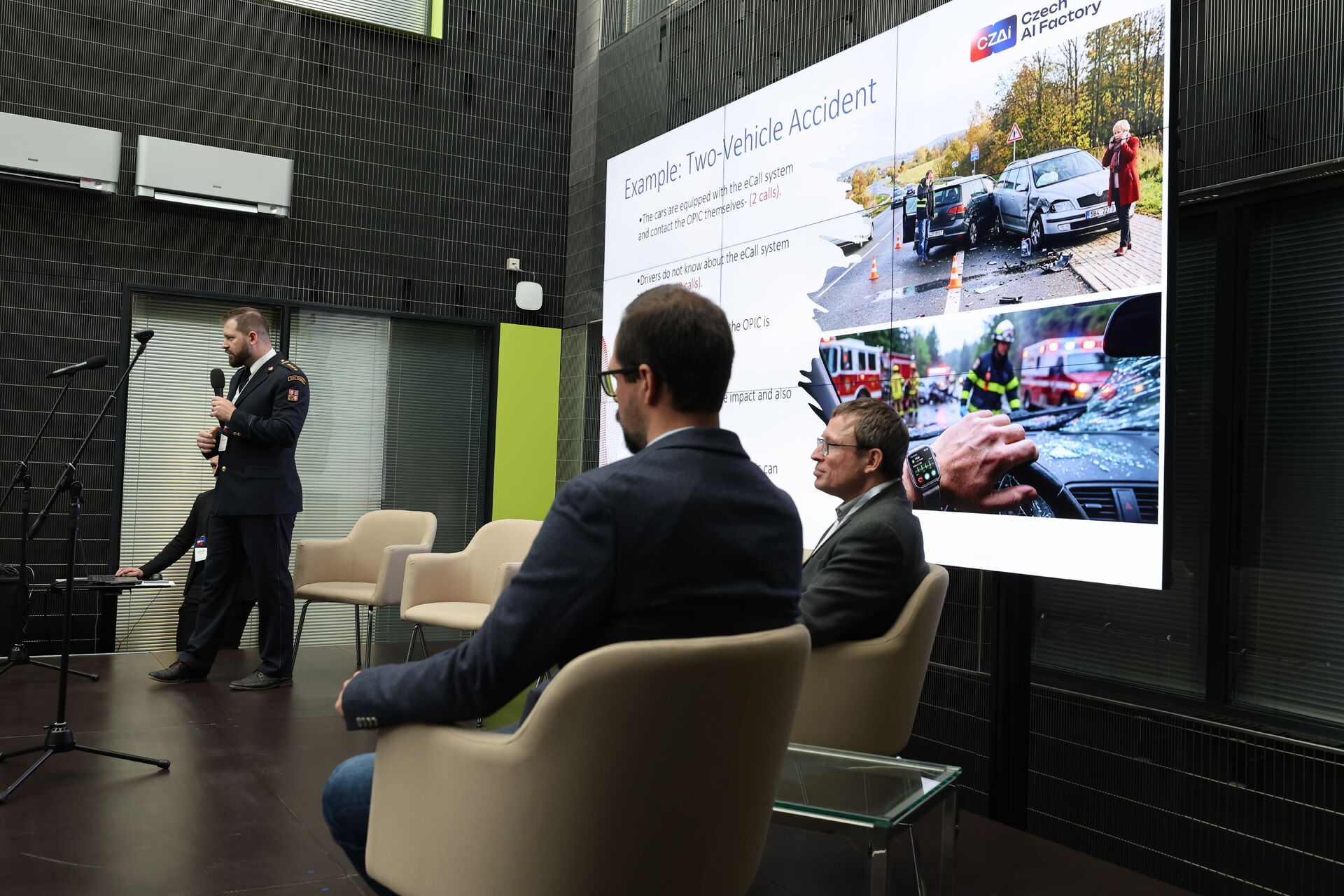
During the launch event at IT4Innovations, one of the first concrete applications developed within CZAI was presented: an AI voicebot for the emergency line 112, jointly developed by IT4Innovations and Brno University of Technology for the Fire Rescue Service of the Czech Republic. The system can automatically communicate with callers, collect basic information about emergencies and pass the information to emergency operators. The technology is already being tested in the 112 environment and will continue to evolve within CZAI using advanced language models, speech technologies and high-performance computing. “Czech AI Factory will help apply advanced AI technologies and supercomputing infrastructure to solve real-world challenges in public safety, crisis management and public services,” said Jan Černocký, Head of the Department of Computer Graphics and Multimedia at FIT BUT.
CZAI focuses on applications in industry, healthcare, energy, public administration, cybersecurity and future mobility. Users will gain access to AI-optimised computing infrastructure, expert support, data services, AI testing environments and educational programmes.
“Czech industry today needs to accelerate the adoption of new technologies, optimise production and respond to the shortage of skilled workers. CZAI will connect AI with real industrial processes, data and industrial testbeds, enabling companies to use advanced AI tools without having to build an extensive infrastructure of their own,” said Petr Kadera, Head of the Intelligent Systems for Industry Department at CIIRC CTU and lead coordinator for industrial and advanced manufacturing services within the project. Commenting on the role of CIIRC CTU, he added: “The real value of Czech AI Factory lies not only in unique supercomputing capacity, but also in people who understand both artificial intelligence and the specific sectors where it is deployed. At CIIRC CTU, we have been building this combination of expertise across industry, healthcare, energy, transport and public administration for many years - and we are now bringing it into this national initiative with European reach.”
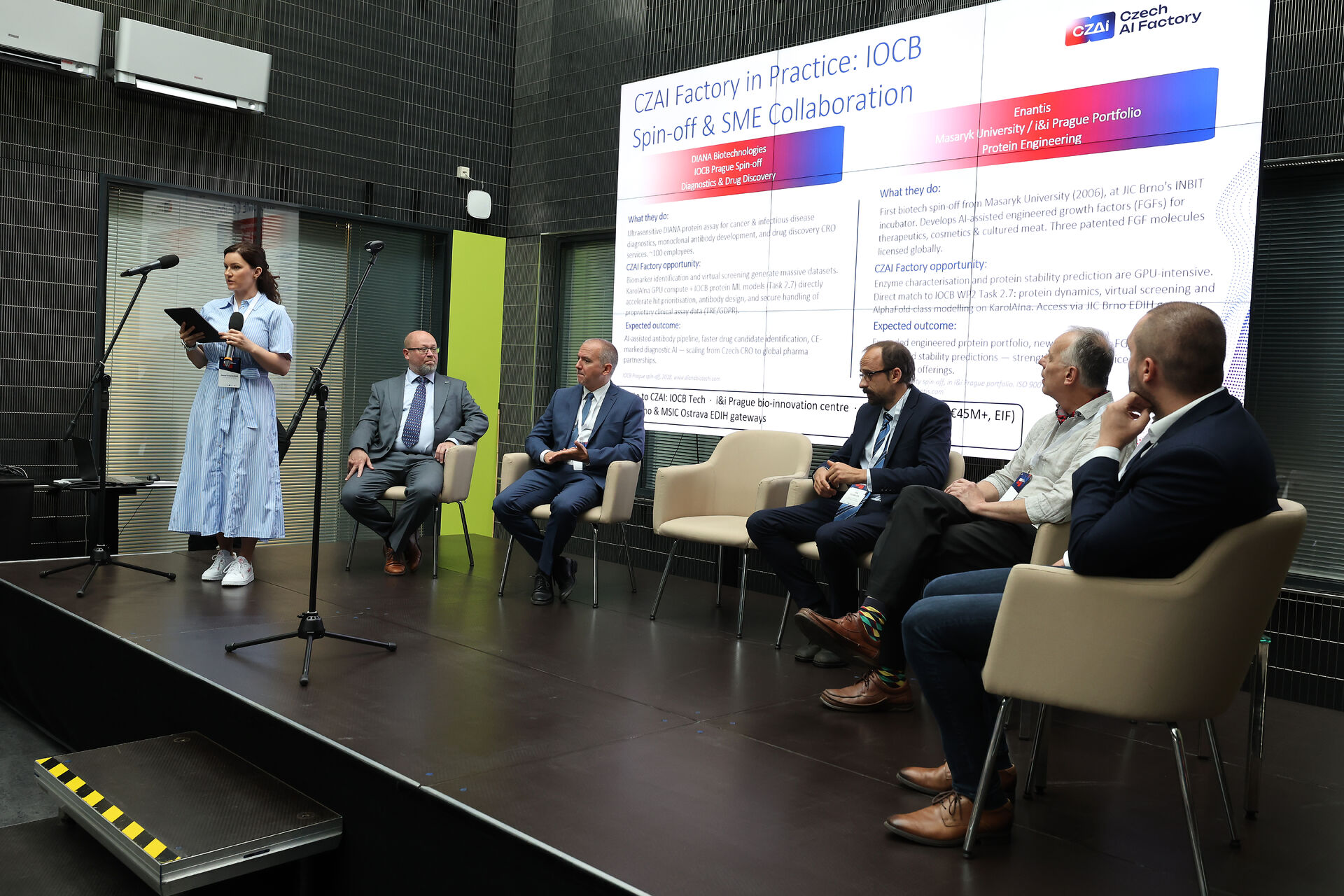
“In healthcare and life sciences, we see enormous potential in working with large-scale biological and medical datasets. CZAI will enable faster development of AI models for diagnostics, personalised medicine and drug discovery,” said Jiří Vondrášek, Head of the Bioinformatics Group at IOCB Prague and lead coordinator for healthcare and life sciences together with Tomáš Pluskal. “We will also contribute advanced AI tools for intelligent search and knowledge integration using RAG and Knowledge Graph technologies,” added Vít Dočkal, Director of INDRC.
“Today’s energy sector requires more accurate predictions, more efficient management and better use of data. The combination of AI and supercomputing can significantly improve optimisation of renewable energy sources, energy grids and predictive maintenance,” said Stanislav Mišák, Director of the Centre for Energy and Environmental Technologies (CEET) at VSB-TUO and coordinator for energy and sustainability.
“Public administration and cybersecurity will increasingly depend on the ability to use AI securely and efficiently. CZAI will provide both infrastructure and expert support for developing trustworthy AI solutions in line with European legislation,” emphasised Viliam Lisý from the Faculty of Electrical Engineering at CTU in Prague (FEE CTU), coordinator for public administration and cybersecurity.
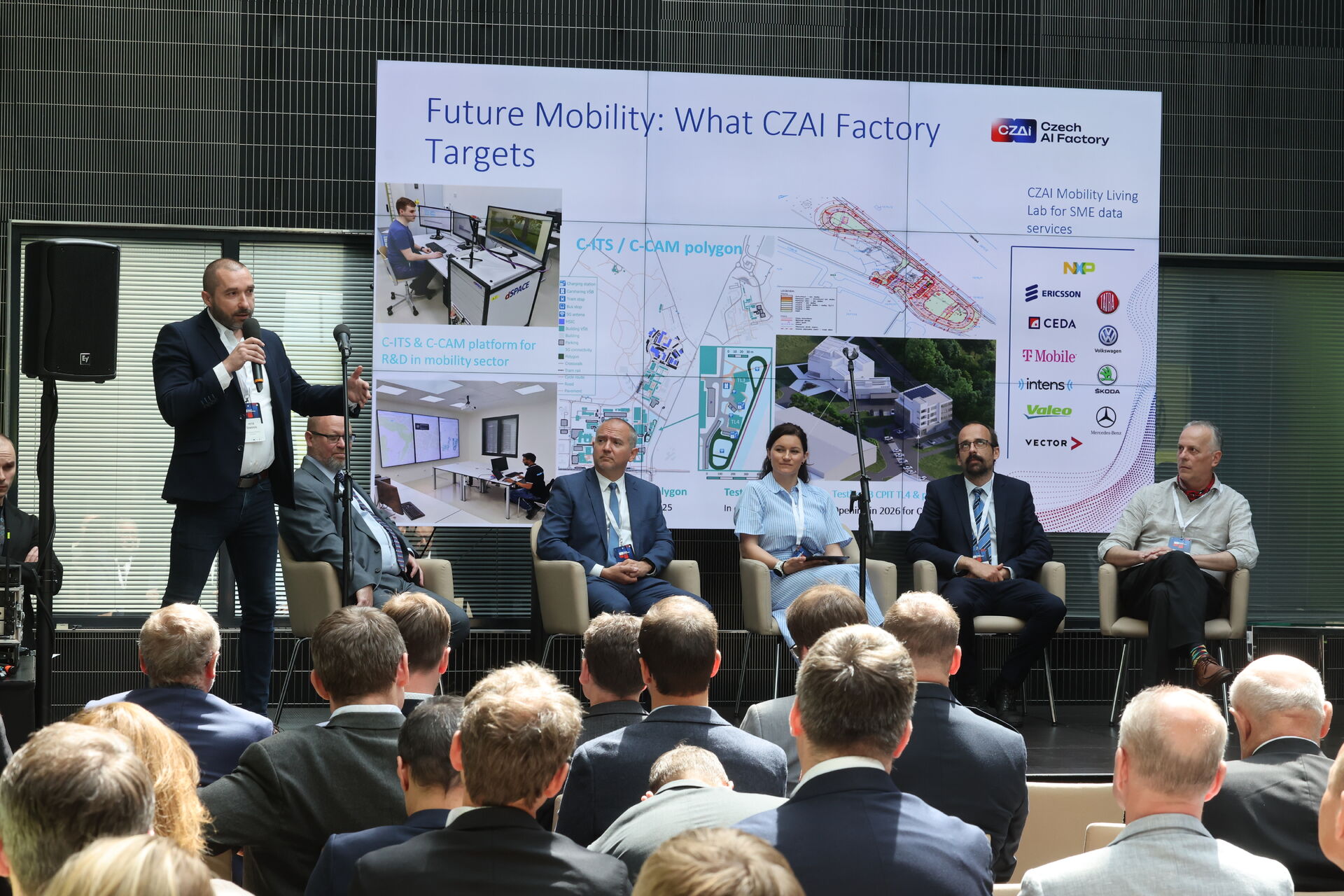
“Transport and future mobility will increasingly rely on data, simulations and autonomous decision-making. CZAI will support the development of AI solutions for logistics, traffic management and intelligent mobility systems,” explained Petr Šimoník, Vice-Dean for Industry Cooperation and Commercialisation at the Faculty of Electrical Engineering and Computer Science of VSB-TUO and coordinator for transport and future mobility.
Charles University leads the development of AI tools, models and algorithms within the project. “Together with the other partners, we will develop foundational text, vision, speech and multimodal AI models and tools, both for Czech and for other languages,” added Jan Hajič, Deputy Director of the Institute of Formal and Applied Linguistics (UFAL) at MFF UK.
CZAI will closely cooperate within the EuroHPC AI Factories network and with other European initiatives supporting the deployment of artificial intelligence into practice. The project supports the entire AI lifecycle - from data preparation and model training to deployment - while placing strong emphasis on trustworthy, explainable and energy-efficient AI aligned with European values and regulations.
Czech AI Factory is laying the foundation for the long-term development of artificial intelligence in the Czech Republic, including future large-scale European AI programmes. The total budget of the project amounts to nearly CZK 1 billion (€40 million). Half of the funding is provided by EuroHPC JU, while the remaining half comes from Czech national sources. Approximately half of the budget will be dedicated to the acquisition and operation of the KarolAIna supercomputer, with the remaining resources supporting AI services for CZAI users.
.png)